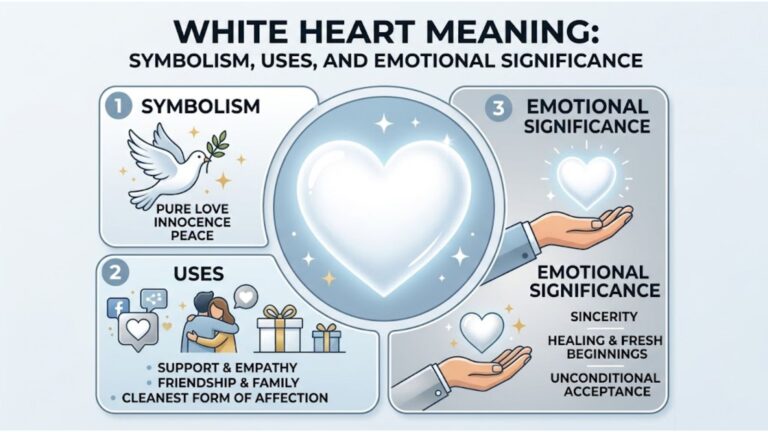
In today’s fast-paced digital world, emojis have become an essential part of how we express emotions and connect with others. Among the many heart emojis available, the white heart (🤍) stands out for its calm and meaningful symbolism. Unlike brighter or more intense heart colors, the white heart carries a gentle message of purity, peace, and sincere affection. It is often used when someone wants to communicate emotions in a subtle, thoughtful, and emotionally balanced way.
What Does the White Heart Mean?
The white heart emoji (🤍) generally represents purity, peace, and unconditional love. Unlike the red heart, which is strongly linked to romantic feelings, the white heart conveys a softer, more neutral emotion. It can symbolize kindness, innocence, and emotional clarity.
People often use the white heart when they want to express sincere affection without romantic implications. It is also used to show support, compassion, or sympathy, making it versatile across different situations.
Symbolism of the White Heart
1. Purity and Innocence
The color white has long been associated with purity and innocence in many cultures. When paired with the heart symbol, it emphasizes a love that is genuine, honest, and free from negativity.
2. Peace and Harmony
The white heart can also symbolize peace. It is often used in conversations that promote calmness, healing, or reconciliation. When someone sends a white heart, they may be expressing a desire for emotional balance and harmony.
3. Spiritual Love
In some contexts, the white heart represents spiritual or divine love. This type of love goes beyond physical attraction and focuses on deeper emotional or spiritual connections.
4. Support and Sympathy
The white heart is commonly used to express condolences or support during difficult times. It conveys empathy in a gentle and respectful way, making it appropriate for sensitive situations.
White Heart vs Other Heart Emojis
Understanding how the white heart differs from other heart emojis can help you use it more effectively.
- Red Heart (❤️): Represents deep romantic love and passion.
- Pink Heart (💖): Symbolizes playful, sweet, or affectionate love.
- Black Heart (🖤): Often used for dark humor, sadness, or edgy aesthetics.
- Blue Heart (💙): Represents trust, loyalty, and calmness.
- White Heart (🤍): Stands for purity, peace, and unconditional care.
The white heart is unique because it carries emotional warmth without being overly intense or romantic.
When to Use the White Heart Emoji
1. Showing Genuine Care
You can use the white heart when you want to express care without suggesting romantic interest. It works well in friendships and family relationships.
2. Offering Support
During tough times, sending a white heart can be a simple yet meaningful way to show that you are there for someone.
3. Promoting Positivity
The white heart is often used in messages that spread positivity, kindness, and hope.
4. Aesthetic or Minimalist Expression
Many people use the white heart in social media posts for its clean and minimalistic look. It pairs well with neutral or monochrome themes.
White Heart in Social Media
On platforms like Instagram, Twitter, and TikTok, the white heart emoji has become a popular symbol for aesthetic expression. Influencers and content creators often use it in captions to create a calm, elegant vibe.
It is also commonly seen in hashtags and comments where users want to express appreciation without sounding overly emotional. For example:
- “This made my day 🤍”
- “Sending love and strength 🤍”
The white heart helps maintain a balanced tone that feels warm yet composed.
Cultural Interpretations of the White Heart
While the white heart generally carries positive meanings, its interpretation can vary slightly depending on cultural context.
- Western Cultures: Associated with purity, weddings, and peace.
- Eastern Cultures: Often linked to spirituality and respect.
- Global Digital Culture: Seen as a symbol of kindness, neutrality, and emotional clarity.
Despite these variations, the white heart is widely understood as a positive and gentle symbol.
Emotional Impact of the White Heart
One of the reasons the white heart is so محبوب (popular) is its emotional subtlety. It allows people to express feelings without overwhelming the recipient. This makes it especially useful in situations where strong emotions might feel inappropriate or too intense.
For example, if someone shares a personal struggle, responding with a white heart shows empathy without being intrusive. It communicates, “I care,” in a quiet and respectful way.
White Heart in Relationships
Friendships
In friendships, the white heart is perfect for expressing loyalty and care. It keeps the tone friendly and sincere without crossing into romantic territory.
Family
Among family members, the white heart can symbolize unconditional love and support. It reflects a deep bond that is not dependent on romantic feelings.
Romantic Contexts
Although less common, the white heart can also be used in romantic relationships to represent a pure, calm, and stable form of love.
Psychological Meaning Behind the White Heart
Colors play a significant role in how we perceive emotions. White is often linked to clarity, simplicity, and new beginnings. When combined with the heart symbol, it creates a message that feels clean, honest, and emotionally safe.
From a psychological perspective, the white heart can:
- Reduce emotional intensity
- Promote feelings of calmness
- Encourage trust and openness
This makes it a powerful tool for communication in both personal and digital interactions.
Common Misinterpretations
While the white heart is generally positive, it can sometimes be misunderstood.
- Seen as cold or distant: Because it lacks the warmth of red or pink, some people may interpret it as less emotional.
- Overly neutral: In romantic contexts, it might not convey strong feelings.
To avoid confusion, it is important to consider the context and your relationship with the person you are communicating with.
Tips for Using the White Heart Effectively
- Know your audience: Use it with people who understand its meaning.
- Match the tone: Pair it with messages that are calm and sincere.
- Avoid overuse: Like any emoji, using it too often can reduce its impact.
- Combine thoughtfully: It can be paired with other emojis for added meaning, such as ✨🤍 or 🌿🤍.
Conclusion
The white heart emoji (🤍) is a powerful yet understated symbol in modern communication. It represents purity, peace, and unconditional care, making it suitable for a wide range of situations. Whether you are expressing support, kindness, or quiet affection, the white heart allows you to communicate your feelings in a gentle and meaningful way.
As digital language continues to evolve, symbols like the white heart remind us that even the simplest expressions can carry deep emotional significance.
FAQs About White Heart Meaning
1. What does the white heart emoji mean in texting?
The white heart emoji typically means purity, peace, and genuine care. It is often used to show support or affection without romantic intent.
2. Is the white heart romantic?
Not usually. While it can be used in romantic contexts, it generally represents a more neutral and pure form of love rather than passionate romance.
3. When should I use the white heart emoji?
You can use it when expressing kindness, sympathy, friendship, or emotional support.
4. What is the difference between a white heart and a red heart?
A red heart symbolizes deep romantic love, while a white heart represents calm, pure, and unconditional care.
5. Can the white heart be used for condolences?
Yes, the white heart is often used to express sympathy and support during difficult times.
6. Why do people use the white heart on social media?
People use it for its aesthetic appeal and its ability to convey gentle, positive emotions without being too intense.

