The rich heritage of Scotland is reflected in its unique and beautiful traditional garments, particularly the Highland dress, a stunning ensemble worn during weddings and formal events. Often synonymous with Scotland’s rugged landscapes and storied history, this attire is a symbol of the country’s identity. The Highland dress is deeply rooted in Scottish culture, and when it comes to Scottish weddings, the attire chosen by the groom often includes this regal ensemble.
Highland dress is the traditional, regional dress of the Highlands and Isles of Scotland. It is often characterised by tartan, which is commonly referred to as plaid in North America. The tartan pattern, often associated with the Scottish kilt, stands as an iconic symbol of the Scottish heritage, as it represents both clan affiliations and regional pride. For a Scottish groom, choosing this dress isn’t just about looking good on his big day—it’s about paying homage to the tradition, history, and familial ties that make up Scotland’s cultural tapestry.
The Essentials of Highland Dress
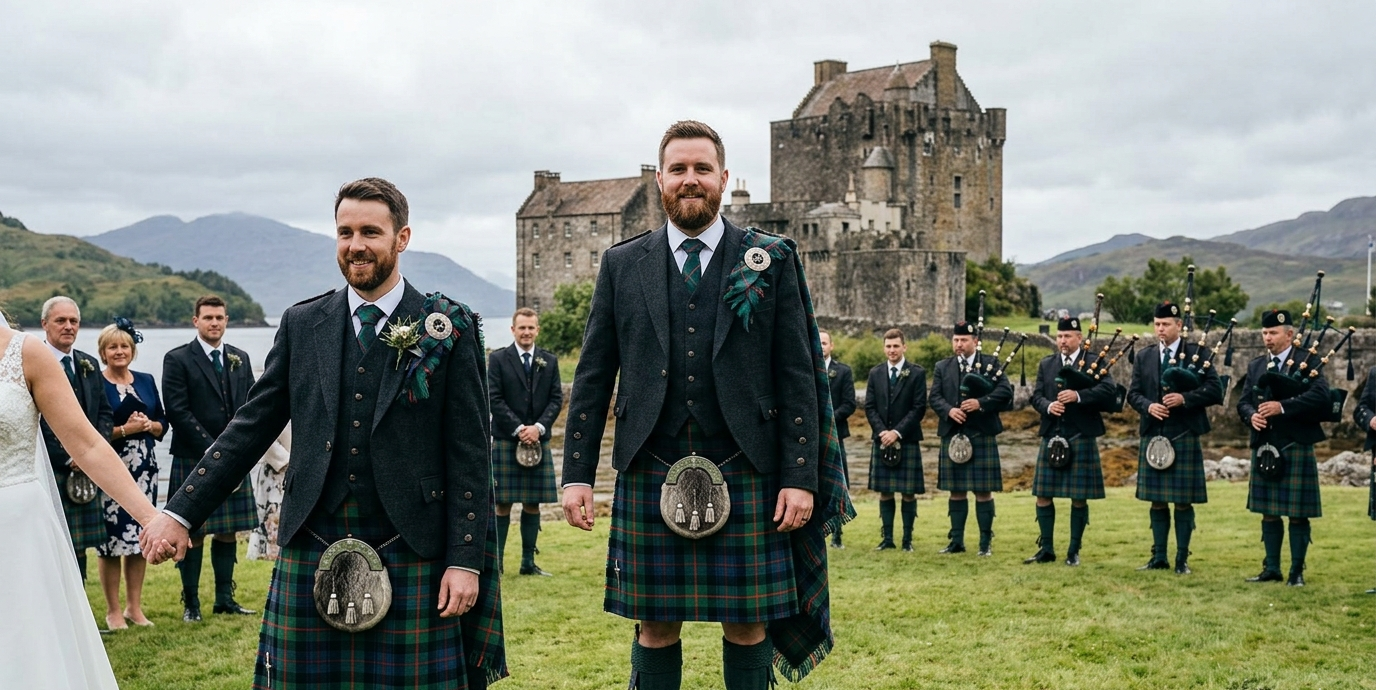
Highland dress is an elaborate and beautifully crafted outfit that blends practicality with cultural significance. The cornerstone of the traditional Scottish groom’s attire is undoubtedly the kilt. Made from woolen cloth, the kilt is usually designed with a tartan pattern, and each tartan can represent different families or clans. It is a symbol of pride for Scottish men and an expression of their heritage.
The kilt, traditionally worn by Highlanders, is a knee-length skirt that is pleated in the back to give room for movement. It is made of durable wool and consists of horizontal and vertical threads woven together to create the intricate patterns that make each tartan unique. This garment is more than just an outfit; it’s a symbol of one’s clan and heritage. Each tartan pattern has its own history, with some dating back several centuries. For example, the Royal Stewart tartan is often chosen for formal events, including weddings, due to its royal associations.
The Jacket and Waistcoat
A Scottish groom often pairs his kilt with a jacket, which complements the tartan and completes the traditional look. The most common jacket worn with Highland dress is the Prince Charlie jacket, which is tailored to fit the groom’s body with a smart, sharp look. This jacket is characterized by its formal nature, typically featuring satin-faced lapels and silver or gold buttons. It is an important element of the outfit, adding sophistication to the overall appearance of the groom.
Underneath the Prince Charlie jacket, the groom typically wears a waistcoat. Waistcoats can be made from a range of materials, but most often, they are made from silk, velvet, or tweed, offering both comfort and style. The waistcoat usually matches the jacket, creating a coordinated look for the groom. Sometimes, a groom may opt for a simple white shirt with a cravat or tie, but the waistcoat offers a traditional touch that enhances the formality of the ensemble.
The Sporran: A Unique Accessory
One of the most striking accessories in Highland dress is the sporran, a small, decorative pouch worn at the front of the kilt. The sporran is an essential part of the outfit, especially for Scottish grooms. Historically, the sporran was a functional item, serving as a storage pouch when the kilt didn’t have pockets. Today, the sporran is more of a decorative accessory, but it still holds its practical value for carrying small personal items during a wedding or other formal occasion.
The sporran is typically made from leather, fur, or even silver, and it is often adorned with intricate designs. Depending on the formality of the event, a groom may opt for a basic leather sporran or a more elaborate design featuring silver accents or Celtic motifs. For a Scottish wedding, the sporran is usually worn with pride, adding an extra layer of authenticity to the traditional dress.
The Kilt Hose and Garter Flashes
To complete the traditional look, the groom must wear kilt hose, a type of knee-length socks that are worn with Highland dress. These hose are typically made from wool, and they are usually white or cream in color, although darker shades are occasionally worn for more formal events. The kilt hose help to add a sense of balance to the outfit, drawing attention to the groom’s legs and creating a streamlined appearance.
A distinctive feature of the kilt hose is the garter flash, a colorful band that is worn around the top of the sock. The garter flash is often made from silk or ribbon and is designed to stand out against the white kilt hose. These flashes may match the groom’s tartan, or they may be selected in complementary colors, adding a pop of color to the outfit.
The Footwear: Ghillie Brogues
The footwear worn by a Scottish groom with his Highland dress is just as important as the rest of the ensemble. Ghillie brogues are the traditional shoes worn with Highland dress. These shoes are typically made from leather and are characterized by their long laces, which are wrapped around the ankles and tied in a knot. The laces on the ghillie brogues are designed to be wrapped around the leg, securing the shoe and creating an elegant, classic look.
Ghillie brogues are often worn for weddings and other formal events as they provide both style and comfort. The shoes are typically made from black or brown leather, and they can feature either a polished or matte finish. The simplicity of the design allows the footwear to complement the rest of the traditional ensemble without drawing too much attention.
The Belt and Buckle
A significant accessory that adds both style and function to the groom’s Highland dress is the belt and buckle. The belt is typically worn with the kilt, and it serves to keep the garment securely in place. The belt is usually made of leather, with a large decorative buckle at the front, which often features a Celtic design or another symbol that is meaningful to the wearer.
The belt and buckle help to anchor the kilt, ensuring that the groom looks polished and well put together on his wedding day. The belt is often worn over the waistcoat, and it serves as a statement piece of the outfit.
The Role of Tartan: Clan and Family Heritage
Perhaps the most iconic feature of Highland dress is the tartan, the distinctive plaid pattern that is woven into the fabric of the kilt. For a Scottish groom, the choice of tartan is an important decision, as it reflects both familial and clan affiliations. The tartan is deeply symbolic, often representing the groom’s family history and lineage.
Each tartan pattern is linked to a specific Scottish clan, and many families have their own distinctive tartan that has been passed down through generations. For example, the MacGregor tartan is closely associated with the MacGregor clan, while the Campbell tartan represents the Campbell family. The choice of tartan is often a matter of personal preference, but it is also a way of honoring family traditions and preserving Scottish history.
Conclusion: The Timeless Appeal of Highland Dress
The Highland dress is a traditional garment for a Scottish groom that beautifully combines cultural heritage, history, and personal pride. From the kilt to the sporran, the jacket to the ghillie brogues, each element of the outfit plays a vital role in creating a cohesive and stylish look. Whether worn for a wedding or another special occasion, the Highland dress continues to be a symbol of Scotland’s rich cultural legacy. For a Scottish groom, donning Highland dress on his wedding day is a powerful gesture that ties him to his roots and celebrates his family’s legacy. It is not just an outfit, but a tribute to the enduring traditions of Scotland, a celebration of heritage, and a timeless statement of style. As weddings become increasingly modern, the Highland dress remains a cherished and iconic choice, representing both the past and the present in a seamless, beautiful way.