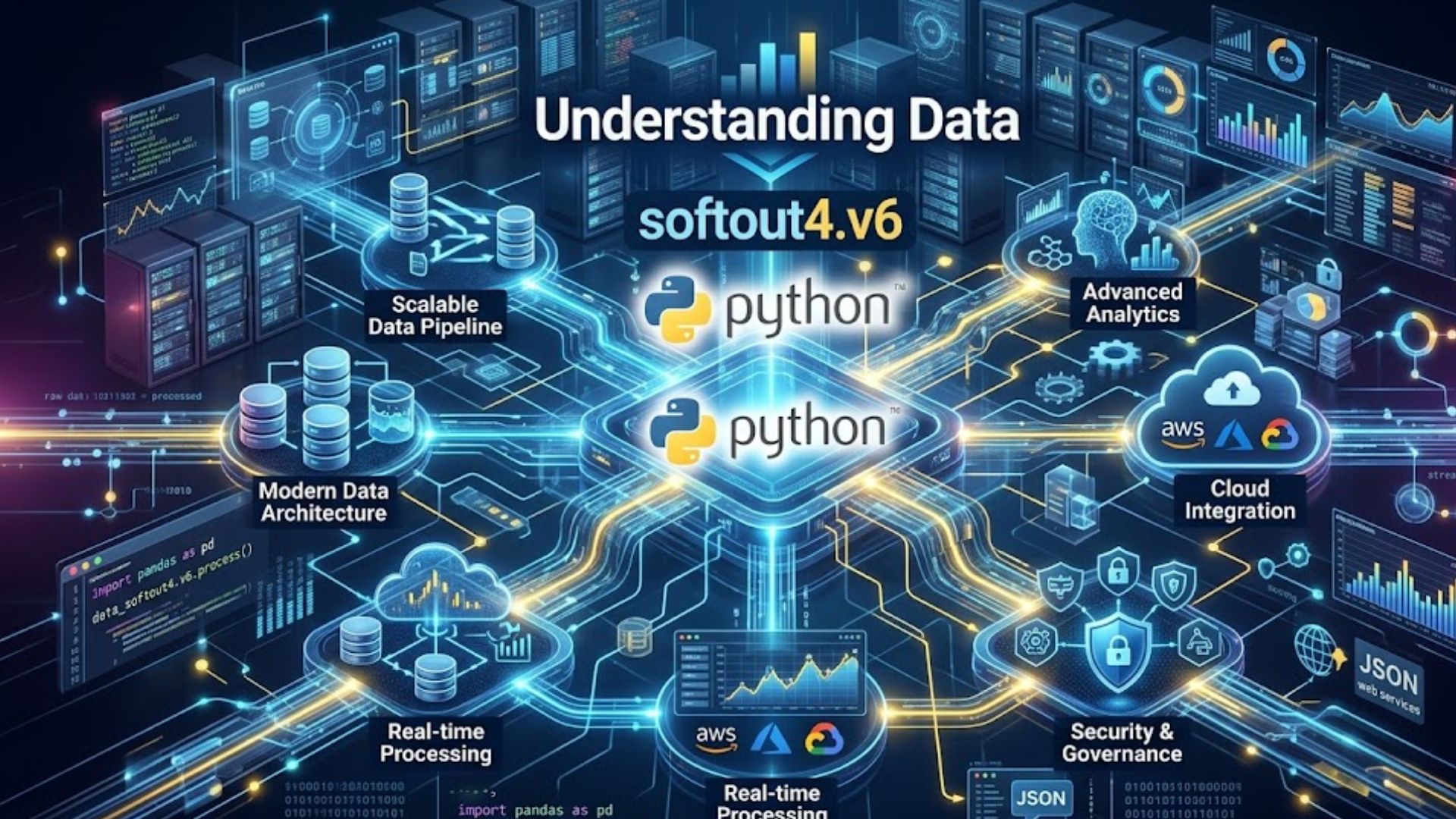
In today’s rapidly evolving technological landscape, data has become one of the most valuable assets for organizations and individuals alike. From business analytics to artificial intelligence, the ability to efficiently manage, process, and analyze data is critical. One emerging concept in this domain is data softout4.v6 Python, which refers to a software environment that integrates advanced data management capabilities with Python-based programming tools.
This article explores what data softout4.v6 Python is, how it works, its key features, benefits, and practical applications, along with frequently asked questions to help you better understand its significance.
What is Data softout4.v6 Python?
Data softout4.v6 Python can be understood as a hybrid system or framework designed to streamline data handling processes while leveraging the power and flexibility of Python. It typically combines:
- Advanced data storage and retrieval mechanisms
- Built-in tools for data analysis and visualization
- Python-based scripting and automation
- Integration with databases and external APIs
This environment allows developers, data scientists, and analysts to perform complex data operations in a unified platform without switching between multiple tools.
Key Components of Data softout4.v6 Python
To better understand this system, it’s important to break it down into its main components:
1. Data Management Layer
This layer is responsible for storing, organizing, and retrieving data efficiently. It may include:
- Structured databases (SQL-based)
- Unstructured data storage (NoSQL, file systems)
- Data pipelines for ingestion and processing
2. Python Integration
Python serves as the core programming interface. Users can:
- Write scripts for automation
- Perform data manipulation using libraries
- Build machine learning models
3. Processing Engine
The processing engine enables real-time and batch data operations. It supports:
- Data cleaning
- Transformation
- Aggregation
4. Visualization Tools
Data softout4.v6 Python environments often include built-in visualization features, allowing users to:
- Generate charts and graphs
- Build dashboards
- Present insights effectively
Features of Data softout4.v6 Python
This system offers a wide range of features that make it highly useful for modern data workflows:
1. Scalability
The platform can handle large datasets, making it suitable for enterprise-level applications.
2. Flexibility
Python integration allows customization and adaptability across various use cases.
3. Automation
Users can automate repetitive data tasks such as data cleaning and report generation.
4. Real-Time Processing
Some implementations support real-time data streaming and analytics.
5. Security
Advanced security features ensure safe data storage and access control.
Benefits of Using Data softout4.v6 Python
Improved Efficiency
By combining data management and Python programming in one environment, users can significantly reduce workflow complexity.
Enhanced Productivity
Developers and analysts can work faster with fewer tools and less context switching.
Better Data Insights
Integrated visualization and analytics tools enable deeper insights into data.
Cost-Effectiveness
Using a unified system reduces the need for multiple software subscriptions.
Easy Learning Curve
Since Python is widely known, many users can quickly adapt to this system.
Applications of Data softout4.v6 Python
Data softout4.v6 Python can be applied across multiple industries and domains:
1. Business Analytics
Organizations use it to analyze sales data, customer behavior, and market trends.
2. Machine Learning
It supports model training, testing, and deployment using Python libraries.
3. Financial Analysis
Financial institutions can process large volumes of transactional data efficiently.
4. Healthcare Data Management
Hospitals and research institutions can manage patient records and research data.
5. E-commerce Platforms
Online businesses can track user interactions, inventory, and sales performance.
How Data softout4.v6 Python Works
The working process of this system typically follows these steps:
- Data Collection
Data is gathered from multiple sources such as databases, APIs, or files. - Data Storage
The collected data is stored in structured or unstructured formats. - Data Processing
Python scripts are used to clean, transform, and analyze the data. - Data Visualization
Results are presented through charts, graphs, or dashboards. - Decision Making
Insights derived from the data are used for strategic decisions.
Comparison with Traditional Data Systems
| Feature | Traditional Systems | Data softout4.v6 Python |
|---|---|---|
| Integration | Limited | Highly integrated |
| Programming | Multiple languages | Python-focused |
| Flexibility | Low | High |
| Automation | Partial | Extensive |
| Scalability | Moderate | High |
This comparison highlights why modern systems like data softout4.v6 Python are gaining popularity.
Challenges and Limitations
While the system offers many advantages, it also has some challenges:
Complexity for Beginners
New users may find it overwhelming due to its wide range of features.
Resource Requirements
Handling large datasets may require high computational power.
Maintenance
Regular updates and maintenance are necessary to ensure optimal performance.
Security Risks
Like any data system, it must be properly configured to prevent data breaches.
Future of Data softout4.v6 Python
The future of data softout4.v6 Python looks promising as data continues to grow exponentially. Some expected trends include:
- Integration with artificial intelligence and deep learning
- Enhanced cloud-based capabilities
- Improved real-time analytics
- Greater automation through AI-driven tools
As organizations increasingly rely on data-driven decision-making, such environments will become even more essential.
Best Practices for Using Data softout4.v6 Python
To maximize the benefits of this system, consider the following best practices:
- Keep your Python libraries updated
- Use efficient data structures
- Implement strong security protocols
- Optimize queries and scripts
- Regularly back up your data
FAQs About Data softout4.v6 Python
1. What is data softout4.v6 Python used for?
It is used for managing, processing, and analyzing data within a Python-based environment, making it ideal for data science, analytics, and automation tasks.
2. Is data softout4.v6 Python suitable for beginners?
Yes, but beginners may need some basic knowledge of Python and data handling concepts to fully utilize its features.
3. Can it handle large datasets?
Yes, it is designed to be scalable and can efficiently process large volumes of data.
4. Does it support machine learning?
Absolutely. Since it integrates with Python, it supports popular machine learning libraries and frameworks.
5. Is it secure?
It can be highly secure if proper configurations, encryption, and access controls are implemented.
6. How is it different from traditional data tools?
Unlike traditional tools, it combines data management and Python programming in a single, integrated platform.
7. Can it be used in cloud environments?
Yes, many implementations support cloud integration for better scalability and accessibility.
Conclusion
Data softout4.v6 Python represents a modern approach to data management by combining powerful Python programming capabilities with advanced data handling features. Its flexibility, scalability, and efficiency make it a valuable tool for businesses, developers, and data professionals.
As data continues to drive innovation across industries, adopting integrated environments like data softout4.v6 Python can provide a significant competitive advantage. Whether you are analyzing business trends, building machine learning models, or managing large datasets, this system offers a comprehensive solution for all your data needs.